Philosophical Upcycling
We are convinced that traditional philosophy can answer the burning questions of today’s digitalization:
- What keeps people trapped in social media?
- How do we deal with the new dependencies of digital technology?
- How can we preserve the freedoms we have gained?
Questions like these recur throughout the millennia-old history of philosophy. People, society and world consciousness are progressing. But we can only speak of real progress if we as a society can remember what we have learned from the crises of our history.
Philosophical Upcycling is an interdisciplinary initiative that retools philosophical thought to confront the complexities of the digital age. It doesn’t treat philosophy as a museum of ideas, but as a living, adaptive practice that can be reshaped to illuminate current technological, ethical, and societal shifts.
The project critically engages with themes such as artificial intelligence, automation, algorithmic governance, and digital subjectivity. Rather than offering ready-made solutions, it proposes philosophical tools for navigating these transformations—tools that are repurposed, reinterpreted, and sometimes radically reimagined.
Through essays, workshops, dialogues, and visual experiments, the project fosters a public-facing philosophy—accessible but not simplistic. It encourages speculative thinking, poetic rigor, and intellectual humility in the face of uncertain futures. In short, Philosophical Upcycling is a space for reflective experimentation: thinking-with rather than thinking-against the digital world.
Conceptual Figures of Thought
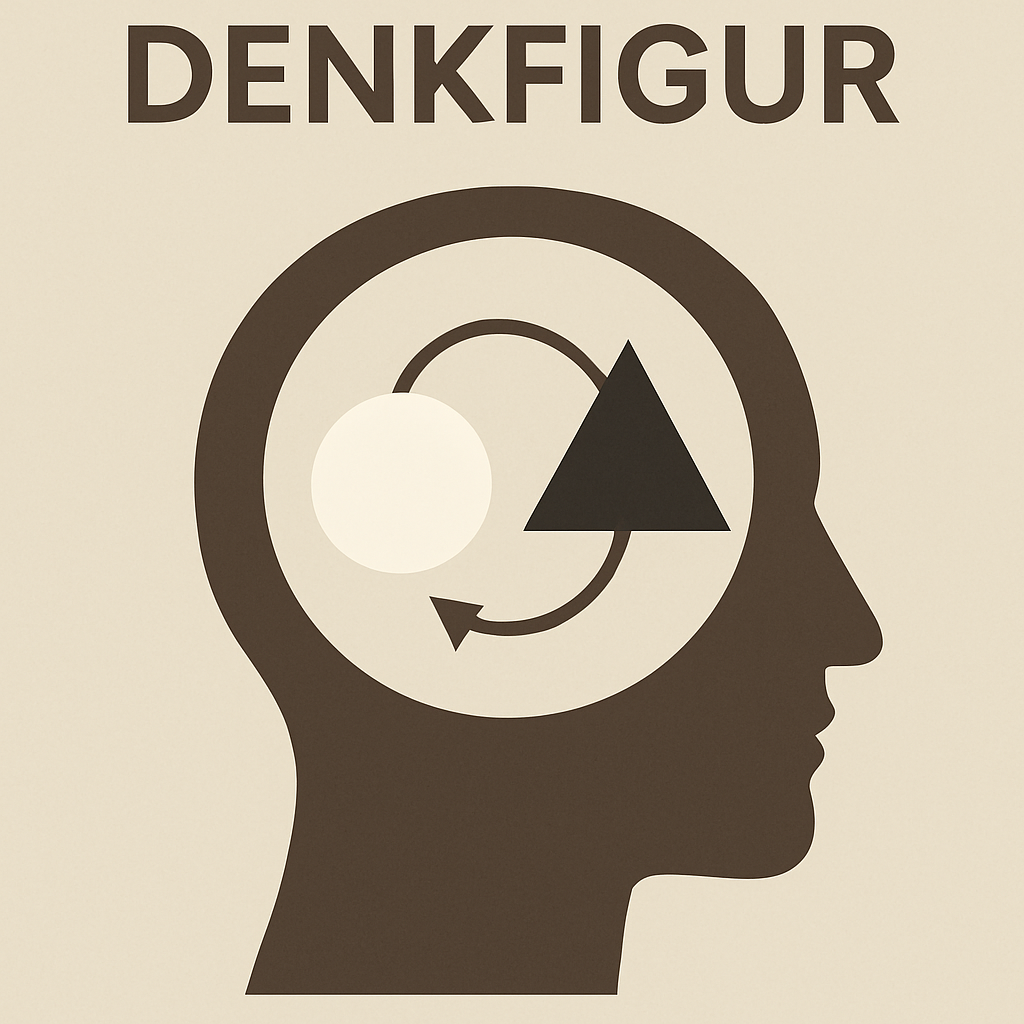
A Denkfigur—or figure of thought—is a conceptual tool that shapes how we perceive, structure, and engage with complex ideas.
Answers to contemporary questions of digitalization seem to lie in theoretical components that have been taken up again and again across philosophical discourses. Example: justice. Is digitalization fair or does digitalization increase justice?
Rather than being neutral, it guides interpretation, channels attention, and opens specific ways of seeing while closing off others. Often metaphorical or narrative in nature, Denkfiguren make abstract or unfamiliar concepts intelligible by giving them a form. Denkfiguren are not fixed. They can be dismantled, reassembled, or upcycled for new contexts. As such, they are dynamic engines of thought—frames that make thinking possible, and in doing so, shape what can be thought at all.
Interdisciplinarity
All traditions and disciplines have the potential to offer fruitful perspectives on the various opportunities and challenges of digitalization and Generative AI.
Denkfiguren serve as a bridge for interdisciplinary discussions while contributing to effective science communication across both disciplinary and social-cultural boundaries. Consequently, Denkfiguren may be seen as both incubator of progressive philosophical thinking and interdisciplinary dialogue as well as useful tools for translating and communicating results and findings to a wider public.