„Upcycling Philosophy”: Vorüberlegungen zu Denkfiguren im Dialog

Oliver Zöllner

Anna Strasser

Raphael Brähler

How can we apply established philosophical concepts to understanding digital transformation? This essay explores the question through a figure of thought inspired by Günther Anders, the “object shepherd”. Three Platonic dialogues reimagine this concept for today’s challenges.
The dialogues stage encounters between historical thinkers and contemporary voices: Günther Anders cautions that humans risk becoming mere caretakers of machines. Daniel Dennett examines the threat of “counterfeit people” who cannot be distinguished from real humans. Young philosophers argue online about whether AI empowers human authorship or reduces creators to creations.
The essay shows how philosophical dialogue can bridge disciplinary divides and makes a case for face-to-face conversation in an age of mediated communication.
Digital vernetztes Leben: Neue Freiheit der Vernunft?
Philosophiestudie zur Denkfigur der „Vernünftigen Freiheit”
Bitcoin, media streaming, content moderation: three digital phenomena that promise new spaces of freedom. But do they actually lead to reasonable freedom, or do they result in self-sufficient self-determination? This methodological study examines whether the figure of thought inspired by Jürgen Habermas—reasonable freedom—can serve as an analytical tool for digital practices.
The investigation reveals how centering autonomy and autarky on the self creates illusions of independence. Bitcoin promises financial autarky while generating new dependencies. Individualized media streaming erodes shared points of reference. Social media enables visibility while prompting withdrawal from reciprocal intersubjectivity.
The essay bridges philosophical theory and contemporary digital practices, asking whether reasonable freedom reaches its limits in our digital age.

Christoph Böhm
Prompting Imagistic Images
Humans as Shepherds of AI-based Image Production
Oliver Zöllner
What does it mean when humans become “object shepherds” of AI-generated images? This essay examines the figure of thought of the “object shepherd” in the context of AI-based image production, questioning the human role when machines are controlled through prompts.
The analysis reveals how humans increasingly become administrators and curators of automated image generation. Rather than creating directly, they optimize inputs and evaluate outputs. Creative authorship shifts from direct design to indirect steering of algorithmic processes.
The essay connects Günther Anders’ philosophy of technology with current developments in generative AI, exploring how human creativity redefines itself in the age of image synthesis.
Individuum, Datensatz und Gesellschaft
Anthropologische Aspekte des kategorisierten Menschen in der Digitalität
How does permanent data evaluation change our identity? This handbook chapter examines anthropological aspects of the categorized human in digitality, analyzing how people are increasingly defined through their digital data traces.
The investigation reveals that in digitality, humans act from an increasingly relational subject position, permanently linked with and determined by others. Identities are renegotiated in digital contexts, while processes of data analysis and categorization constrain individuality.
The chapter analyzes forms of socialization and dominion in data-driven contexts, asking what it means to be human when permanent categorization becomes an anthropological phenomenon.
Oliver Zöllner
Digitale Ethik und der Umbau der Gesellschaft
Digitalkompetenz für die Datensphäre
Oliver Zöllner

What role do humans play in an increasingly digitalized world? From the perspective of digital ethics, this chapter develops a concept for responsible engagement with digital media environments and outlines the contours of “digital citizenship.”
The analysis reveals how humans increasingly appear as consumers and economic objects in the data-sphere, constantly prompted to produce data sets. Social networks and generative AI exert a pull whose functioning many master only instrumentally, but not reflexively.
The chapter outlines the concept of digital citizenship, which should enable people to lead free lives in digital environments without being subjected to the exploitation interests of digital corporations.
Inbetweenism
Why our concepts reach their limits when it comes to Generative AI
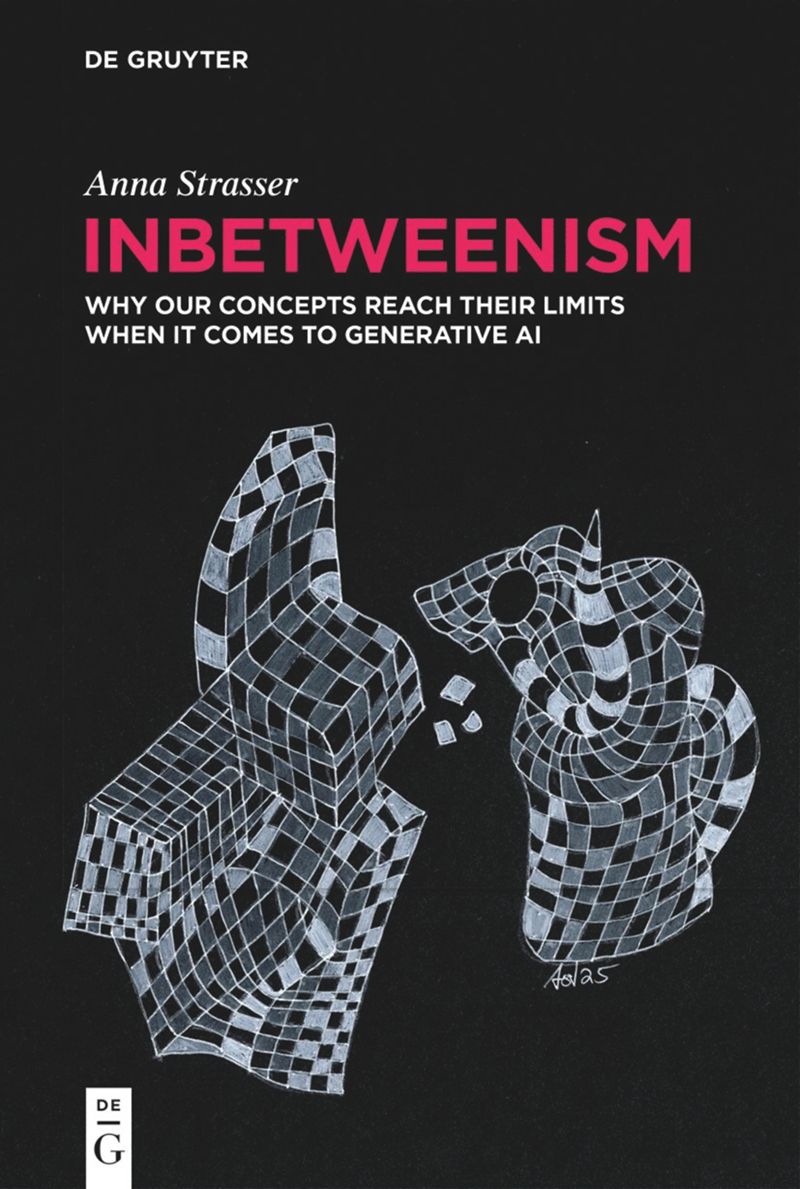
Why do our existing ethical frameworks and concepts of sociality struggle with generative AI? This book challenges the assumed dichotomous distinction between inanimate tools and social agents, preparing the grounds for a new conceptual framework.
The investigation reveals how phenomena like ChatGPT exist in an overlooked INBETWEEN space. Neither purely tools nor social agents, these systems demand new ways of thinking. The book demonstrates why traditional categorizations fail and how social interactions between humans and artificial systems require fresh conceptual approaches.
Strasser develops a framework for understanding these INBETWEEN phenomena, offering philosophical foundations for navigating our increasingly ambiguous technological landscape.

Anna Strasser
Anna’s AI Anthology
How to live with smart machines?
Anna Strasser
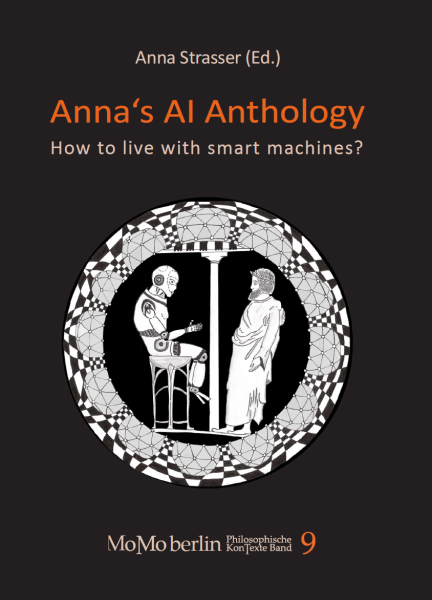
With the release of ChatGPT, large language models have become a prominent topic of international debate. The genie is out of the bottle, but does it have a mind? Can philosophical considerations help us work out how to live with such smart machines?
Distinguished philosophers explore fundamental questions: Can these new machines act? Are they social agents? Do they have communicative skills? Might they even become conscious? Contributors include Daniel Dennett, Eric Schwitzgebel, Sven Nyholm, and other leading thinkers.
The book features a graphic novel by Anna & Strasser as a bonus, making complex philosophical questions accessible through multiple formats.
Künstliche Intelligenz
Die große Verheißung
What promises does artificial intelligence hold for humanity? How did it transform from a purely technical possibility into a widely praised hope? Are such hopes feasible, or do they signal an approaching apocalypse?
The reflections collected in this volume address an era that must confront widespread political despair and looming social turmoil in a global context. These challenges are examined not least through the lens of artificial intelligence’s promises.
This collection hits the nerve of our time, bringing together perspectives on AI as both technological possibility and source of hope in an era marked by political and social uncertainty.

Anna Strasser
Trust and Social Robots
How can We Prevent Social Robots from Eroding Trust?
Anna Strasser
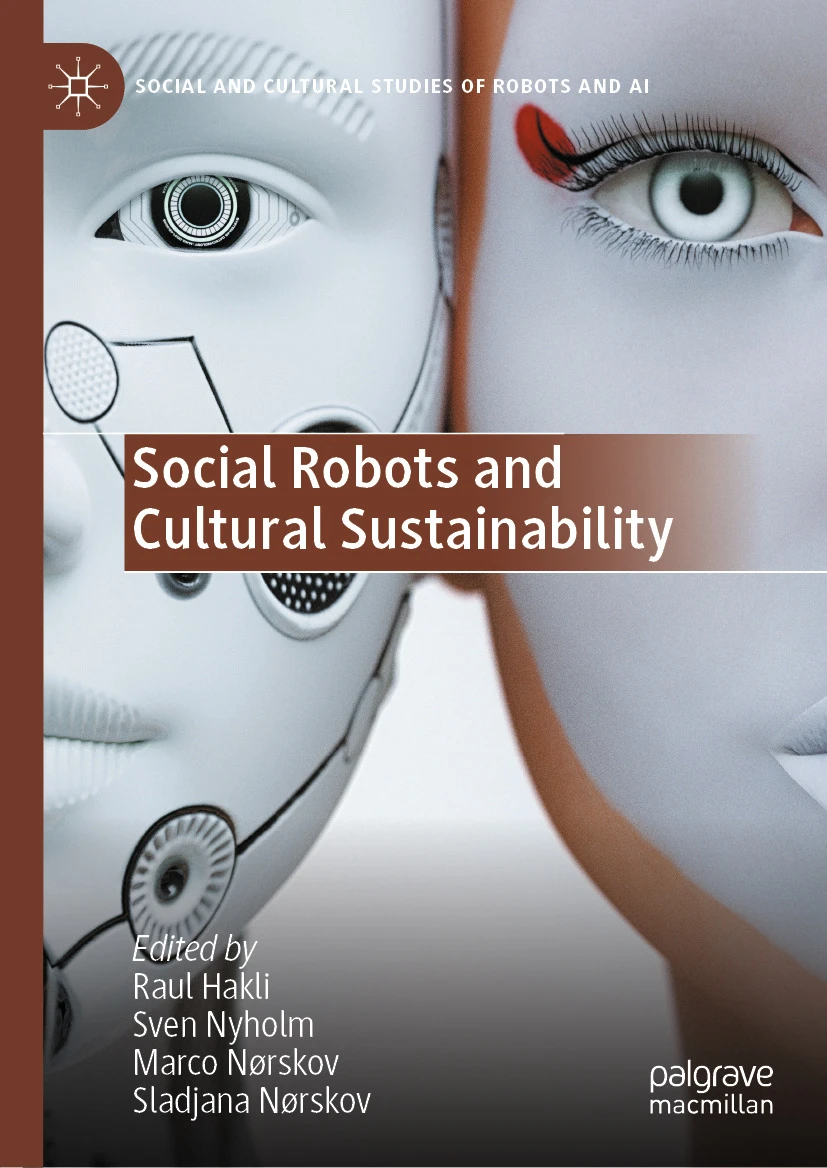
How can we prevent social robots from eroding trust? Being able to judge the reliability of information sources is crucial for knowledge acquisition. Human societies are built on trust, yet social robots equipped with large language models challenge our techniques for trustworthiness assessment.
This chapter examines knowledge transfer between artificial systems and human agents where language plays a central role. After presenting strategies for assessing human-generated content, it explores what requirements artificial systems must meet to be considered trustworthy agents in knowledge transfer.
The analysis reveals how large language model technology poses an epistemological crisis. To contribute to culturally sustainable social robotics, the chapter discusses issues of transparency, trustworthiness, reliability, and authenticity.
Why a careless use of AI tools may contribute to an epistemological crisis
Does careless use of AI tools contribute to an epistemological crisis? With the rise of generative AI technologies like ChatGPT, new questions emerge in education: How can we prove human authorship? Can we still trust electronically distributed texts?
This paper analyzes the inherent unreliability of generative AI and the increasing indistinguishability between human-written and machine-generated texts. It outlines the impact on education and explores whether using such tools could result in a deskilling effect.
The investigation provides suggestions for responsible AI tool use while examining their legitimacy as educational tools in an age of widespread AI adoption.
Anna Strasser
Philosophische Mensch-Maschinen-Interaktionen
Anna Strasser
Are the latest AI tools reliable and trustworthy research tools? In light of increasing philosophical human-machine interactions in the age of generative AI, fundamental questions emerge about intellectual collaboration with artificial systems.
This handbook chapter examines how authorship and responsibility attribution may change when artificial systems play decisive roles in text production. It explores the philosophical implications of AI as research tools and investigates the consequences of growing indistinguishability between human-created and machine-generated texts.
The chapter takes a philosophical approach to these emerging challenges, analyzing how generative AI fundamentally transforms practices of text production and intellectual collaboration in academic contexts.
Persons and their digital replicas
Can a person continue to exist in their digital replica? Creating legacies has traditionally meant leaving behind cultural products like books or art. With advances in AI, a new type of legacy emerges: virtual entities such as chatbots or avatars that act as digital replicas of individuals.
This paper investigates whether and how digital replicas could constitute genuine extensions of personhood. Drawing on Derek Parfit’s work on personal identity, the authors examine under what circumstances one could perceive such replicas as authentic continuations of the original person.
A philosophical exploration of mortality, identity, and technological possibilities, questioning whether our ideas and influence can truly persist beyond our lifetime through artificial means.
Anna Strasser